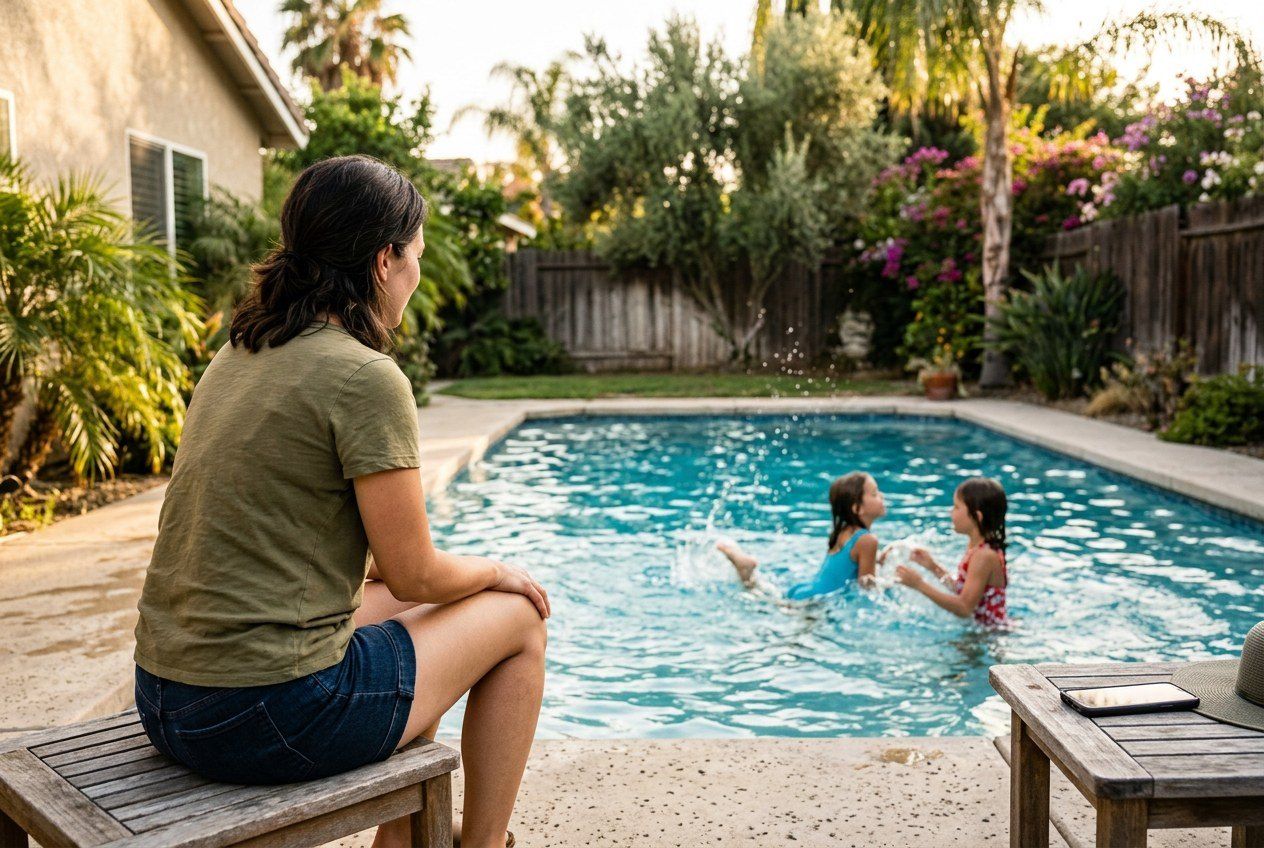
Five habits and safeguards that work best together. Even if your child has had swimming lessons, no child is drown-proof, and nothing replaces adult supervision.
Effective supervision
The most critical line of defense is adult supervision. No level of aquatic skill can replace active supervision. Put phones away while at the pool. If your child is ever missing, look in the water first. More on this in everyday drowning prevention.
Survival swim lessons
A moment's inattention does not have to cost a child his life. Self-rescue training is an added layer of protection, teaching a child water survival skills in a safe environment. See swim lessons and ISR swim lessons explained.
Alarms
Make sure all doors and windows leading to the pool are locked and alarmed. Alarms should indicate that someone is in the pool area or has opened or closed a door or gate, or is trying to climb the fence. Our guide to pool alarms covers the types.
CPR
If an emergency happens, it is essential that parents and families are prepared. Learn to perform CPR on children and adults, and update those skills regularly. Start with CPR basics, then take a hands-on class.
Pool fences
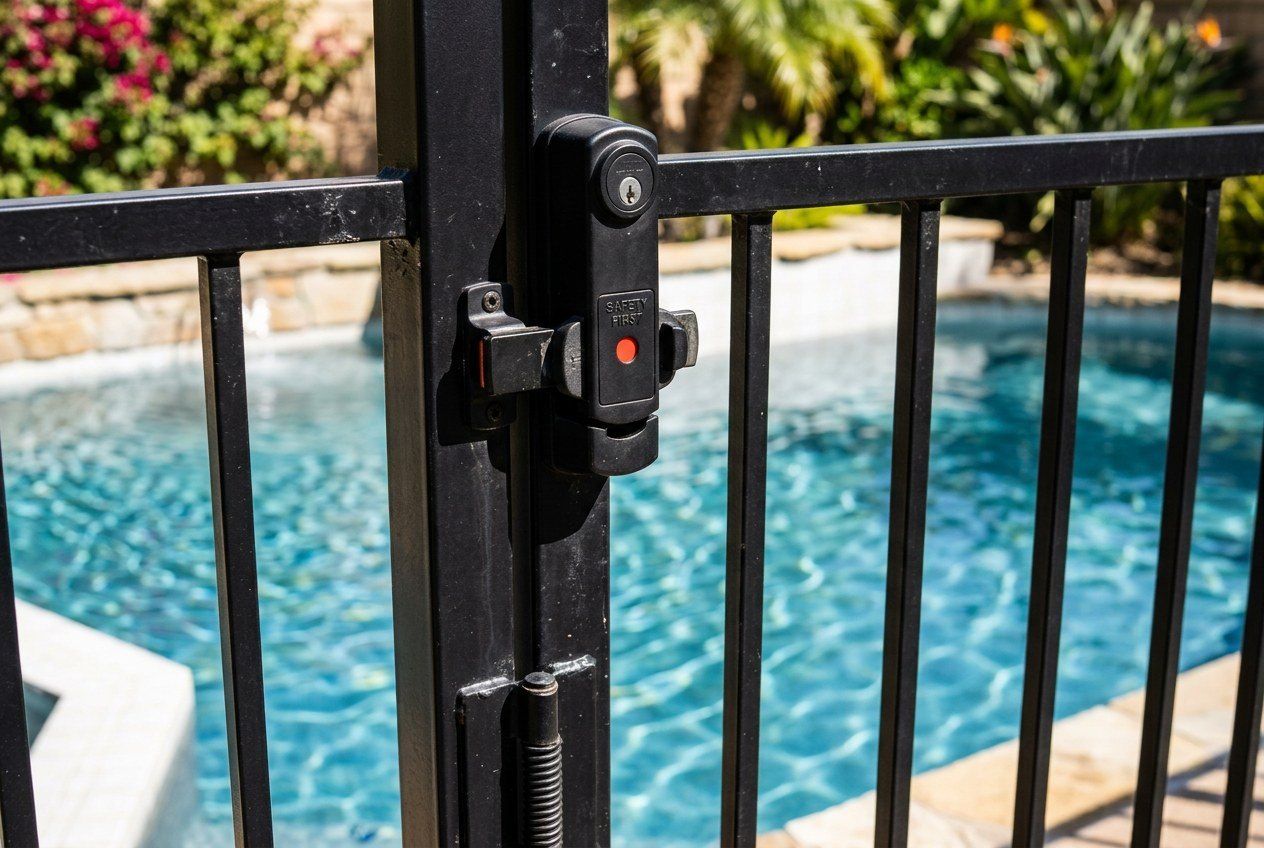
Install a permanent four-sided fence with self-closing, self-latching gates. Keep the fence at least 3 to 5 feet from the pool edge. Remove patio furniture that could be pushed or pulled over and used as a ladder. California's rules are summarized in pool fence requirements in California.
Even if your child has had swimming lessons, no child is drown-proof, and there is absolutely no substitute for adult supervision.