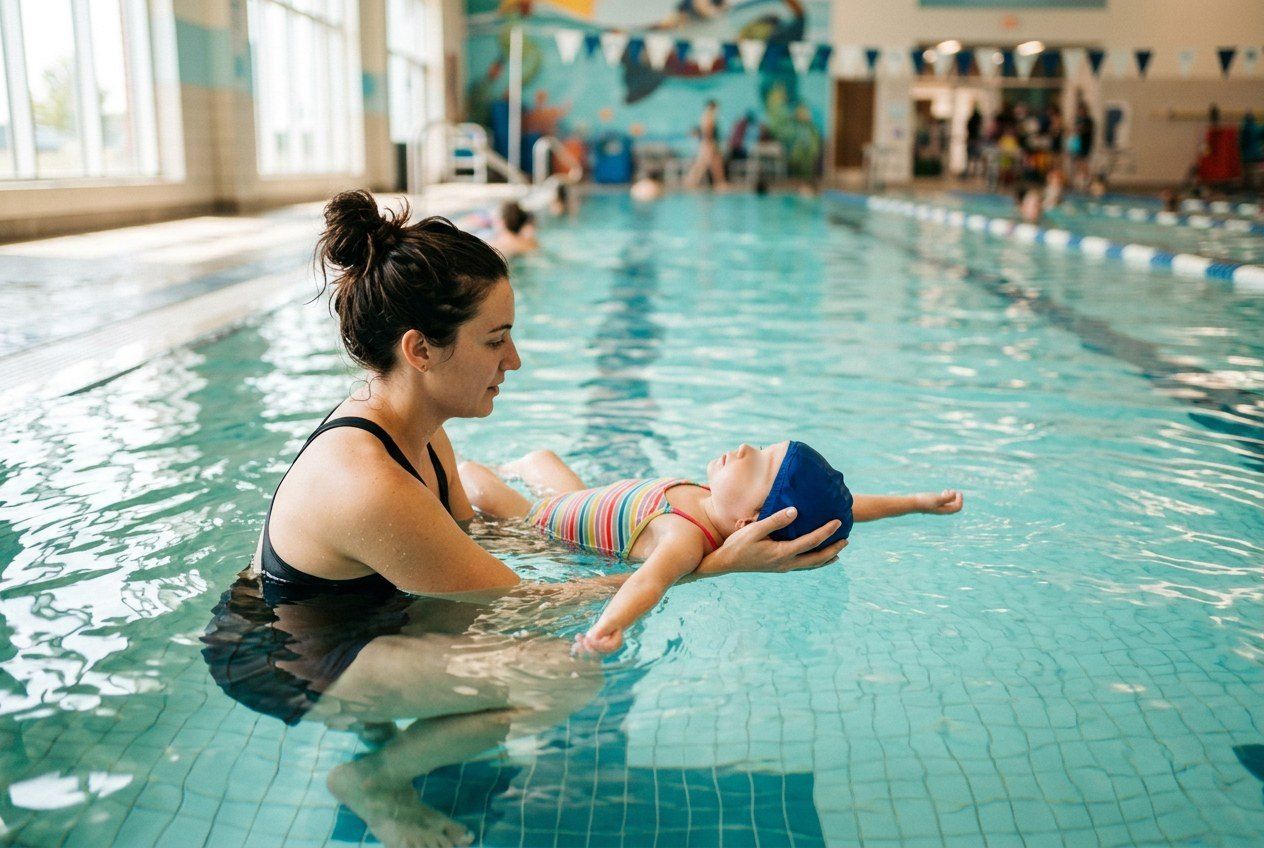
ISR lessons teach babies and toddlers to roll onto their backs and float, and older toddlers to swim, float to breathe and swim again. Here is how the program works and how it fits the wider safety picture.
What ISR is
ISR stands for Infant Swimming Resource, a program started in 1966 by Dr. Harvey Barnett. It teaches what it calls self-rescue skills to children from about 6 months to 6 years old. Lessons are given one-on-one by instructors who are trained and certified through ISR.
The skills depend on age:
- Infants (roughly 6 to 12 months): the "rollback to float". If the child ends up face-down in the water, they learn to roll onto their back and float, rest and breathe until an adult arrives.
- Toddlers and young children (about 1 to 6 years): the "swim-float-swim" sequence. The child swims with the face in the water, rolls onto the back to float and breathe, then rolls over and continues swimming toward the edge or steps.
Some lessons are practiced in clothing and shoes, because children who fall in by accident are usually dressed.
The lesson format
ISR's format is distinctive. Lessons are short, about 10 minutes, and held five days a week, typically for around four to six weeks for a new student, with the exact length depending on the child. The short daily sessions are meant to build skills through repetition without exhausting a small child. Parents usually watch from the deck rather than getting in the water, and the program asks for health information before starting.
How ISR differs from other classes
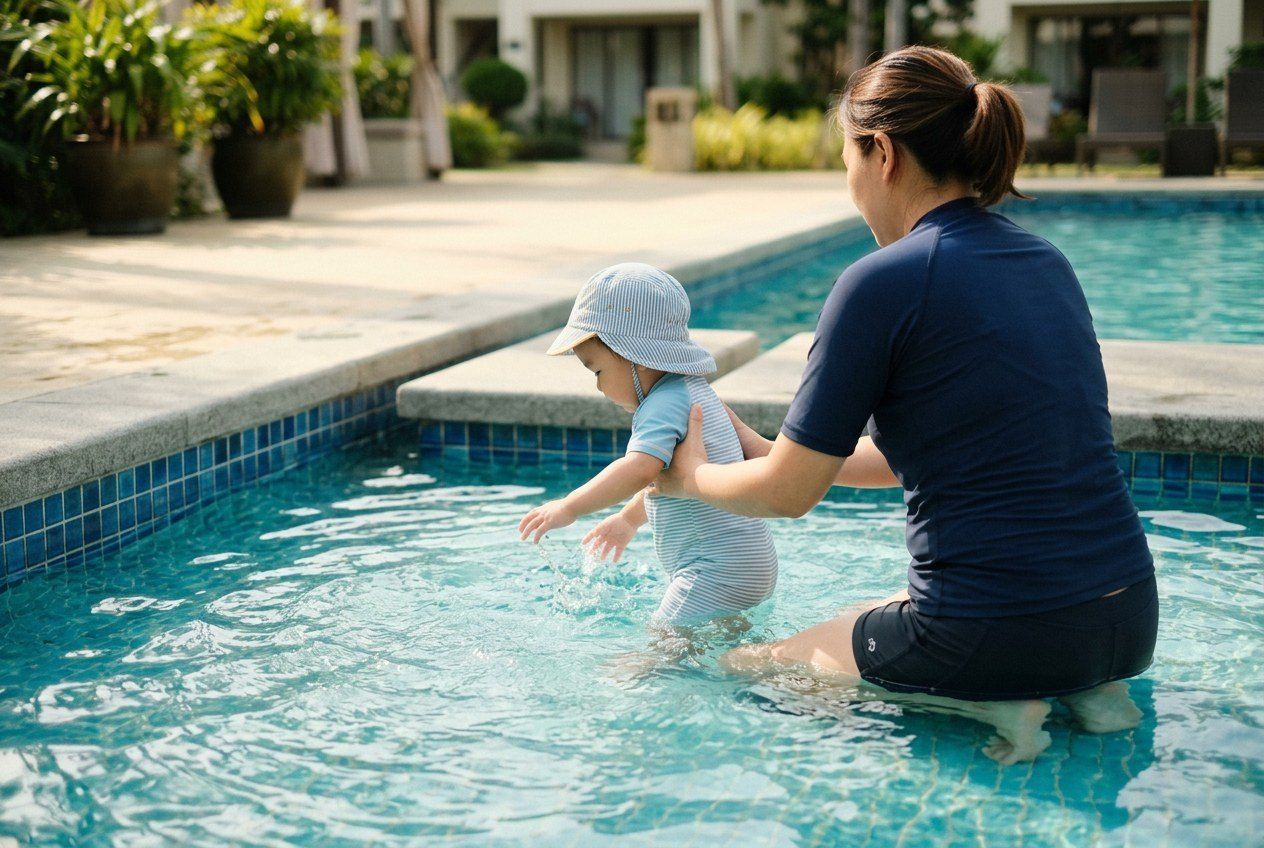
- Parent-and-child classes focus on water comfort, play and simple skills, with the parent in the water. They are a gentle introduction but are not designed to teach self-rescue.
- Group learn-to-swim classes for preschoolers teach strokes, kicking, breath control and water entry and exit, usually once or twice a week.
- ISR and similar survival-swim programs focus narrowly on what a child does if they fall in, with private daily lessons.
Some children cry during the first lessons, which upsets parents; ISR says instructors monitor children closely and adjust. It is reasonable to watch a lesson before enrolling and to ask how the instructor handles distress.
What pediatric guidance says
The American Academy of Pediatrics says swim lessons can reduce drowning risk for children from age 1, and that parents can decide on lessons based on a child's readiness and exposure to water. The AAP also stresses that lessons do not make a child "drown-proof" and do not replace supervision, barriers or life jackets. It does not endorse any specific program. For babies under 1, the AAP says there is no evidence that lessons reduce drowning risk, though water-play classes can be a way to get comfortable in the water.
Questions to ask before enrolling
- Is the instructor currently certified, and how many years have they taught?
- What is the pool temperature and water quality, and is there an adult with current CPR training on site?
- How is progress assessed, and what happens if my child is ill or misses days?
- What refresher lessons are recommended as my child grows?
Whatever program you choose, keep the other layers of protection in place. Read more about readiness and quality instruction on the swim lessons page.
Cost and access
Because ISR lessons are private and daily, the total cost for a session is higher than a typical weekly group class. Prices are set by individual instructors and vary by region. Some community organizations have offered scholarships to make self-rescue lessons more accessible; ask local instructors whether any are available.
After the lessons
Skills fade if they are not used, and children change quickly as they grow. ISR recommends refresher lessons, and any program should be followed by regular, supervised water time. Keep life jackets on young children in open water and on boats regardless of their swim skills.
Choosing between programs
Some families choose ISR for its focus on self-rescue; others prefer group lessons that build swimming skills more gradually, or a combination over time. Consider your child's temperament, how often your family is around water, your schedule for daily lessons and your budget. Whatever you choose, ask to observe a lesson first, confirm the instructor's credentials and keep every other layer of protection in place.
Frequently asked questions
What age can a baby start ISR?
ISR enrolls infants from about 6 months, when they learn the rollback-to-float skill. Older toddlers learn the swim-float-swim sequence.
How long do ISR lessons take?
Lessons are about 10 minutes, five days a week, usually for around four to six weeks for a new student, depending on the child.
Are ISR lessons safe?
They are given one-on-one by certified instructors. Parents should watch a lesson, ask about the instructor’s training and health screening, and talk to their pediatrician if they have concerns.
Does ISR make my child drown-proof?
No program does. Self-rescue skills are one layer of protection and never a substitute for supervision, fences, alarms and life jackets.