
Most pool lifeguards in California hold an American Red Cross or equivalent certification. Getting one starts with a swim test that many applicants underestimate.
The pre-course swim test
The American Red Cross Lifeguarding course, the most widely used program in the U.S., has prerequisites you must pass on the first day. As published by the Red Cross, candidates must be at least 15 years old by the last day of the course and be able to:
- Swim 300 yards continuously, demonstrating breath control and rhythmic breathing, using front crawl, breaststroke or a combination. Goggles are allowed.
- Tread water for 2 minutes using only the legs, with hands under the armpits or otherwise out of the water.
- Complete a timed event within 1 minute 40 seconds: swim 20 yards, surface dive 7 to 10 feet to retrieve a 10-pound object, return to the surface and swim 20 yards on the back holding the object with both hands, then exit the water without using a ladder or steps.
The timed brick event is where most people fail. Practice it before you enroll, ideally at a pool with a deep end and a lifeguard on duty.
What the course teaches
Lifeguard training is mostly about preventing incidents and managing them when they happen. Courses typically combine online lessons with in-water sessions and cover:
- Surveillance and scanning, and recognizing a swimmer in distress or a drowning victim (see signs of drowning).
- Entries, approaches and rescues for active and passive victims, including submerged victims.
- Spinal injury management in shallow and deep water using a backboard.
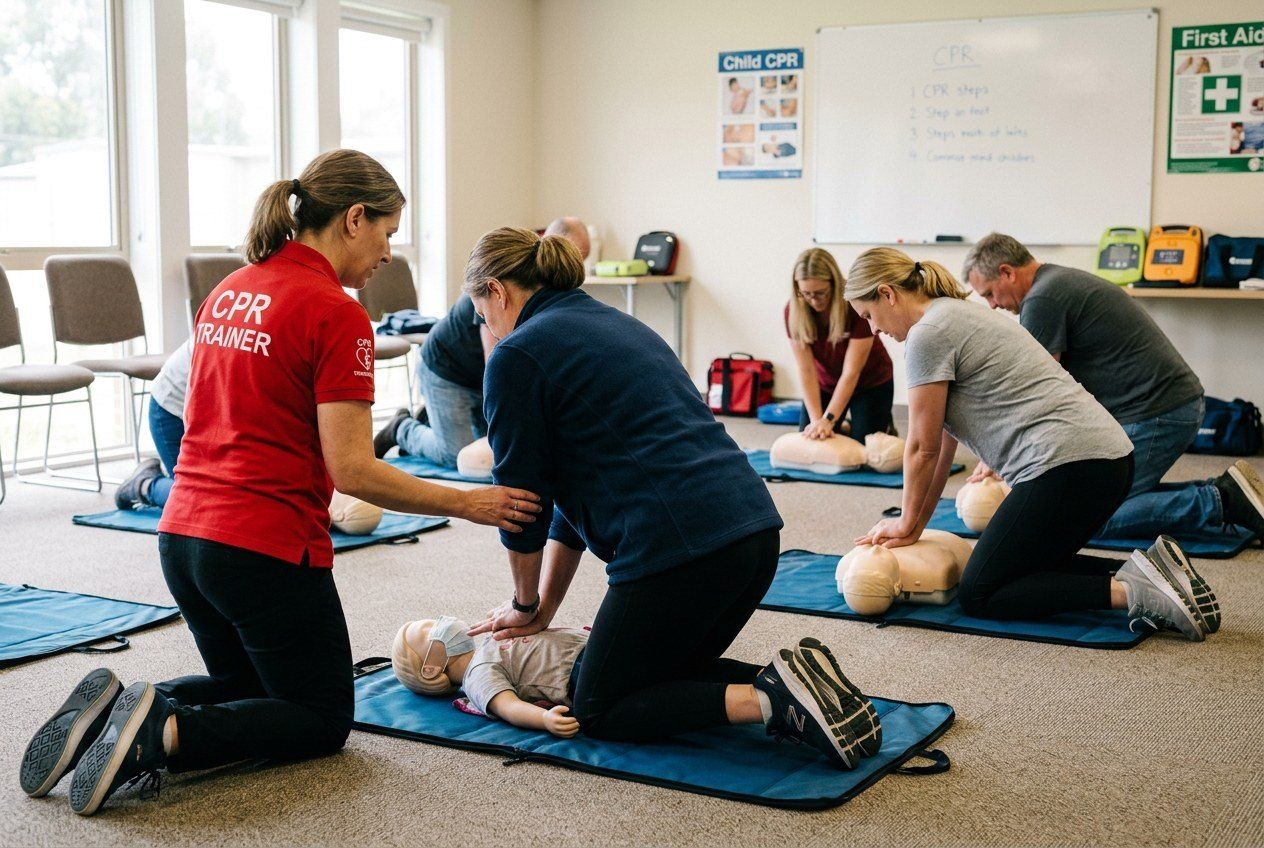
- CPR and AED use for adults, children and infants, rescue breathing with a resuscitation mask or bag-valve-mask, and first aid.
- Emergency action plans and working as part of a lifeguard team.
To pass, candidates must attend all sessions, demonstrate each skill and pass written exams. The Red Cross certificate is valid for two years; staying current requires a review course before it expires.
Other certifications
Not every employer uses the Red Cross. The YMCA, Ellis & Associates and the American Lifeguard Association run their own programs, and some cities train their own staff. Ask the pool you want to work at which certification it accepts before you pay for a course. Waterfront and open-water positions may require additional modules, and ocean lifeguarding is a separate field: California State Parks and coastal cities and counties recruit and train their own ocean lifeguards with longer open-water swim tests. Our open water page explains why surf conditions demand different skills.
Where to find lifeguard training near you
- The Red Cross class finder lists upcoming lifeguarding courses by ZIP code.
- City and county aquatics departments often run spring courses ahead of the summer hiring season and sometimes reimburse fees for new hires.
- YMCAs and school districts with pools frequently host courses.
- Junior lifeguard programs for younger teens run on many beaches in summer; they build skills but are not a certification.
Preparing for the job
Swim laps several times a week for a month before the course, practice treading water with your hands out, and get comfortable surface diving to the bottom of a deep end. Being a strong swimmer is the entry ticket; the course itself is about judgment, vigilance and teamwork. Even if you never work as a guard, the training is one of the best ways to learn CPR and rescue skills.
What lifeguards actually do
Most of a lifeguard's shift is prevention: scanning the water, enforcing rules, rotating between stations, checking equipment and talking to swimmers before they get into trouble. Rescues are rare but must be fast. Employers look for people who stay alert through long, hot shifts, communicate calmly with the public and work as a team. Many pools also expect guards to help with swim lessons or facility tasks.
Costs and timing
Course fees vary by provider and location. Many cities, park districts and YMCAs run courses in spring for summer hires and some cover or refund the fee for staff who work a full season. Ask about paid training when you apply. Plan for the course to take several days of in-person sessions plus online work.
Staying certified
Keep your certificate current, practice skills during in-service training at work, and renew CPR and first aid when your employer requires. Many guards go on to become instructors, which requires a separate instructor course.
Frequently asked questions
How old do you have to be to become a lifeguard?
For the American Red Cross Lifeguarding course, at least 15 years old by the last day of the class. Some employers set a higher minimum age.
What is the lifeguard swim test?
The Red Cross test is a 300-yard continuous swim, 2 minutes of treading water with legs only, and a timed brick retrieval from 7 to 10 feet deep within 1 minute 40 seconds.
How long does lifeguard certification last?
Red Cross lifeguard certification is valid for two years. A shorter review course renews it before it expires.
Is lifeguard training hard?
The swimming prerequisites are the main hurdle. The course itself is demanding but manageable for a fit swimmer who practices the skills.